
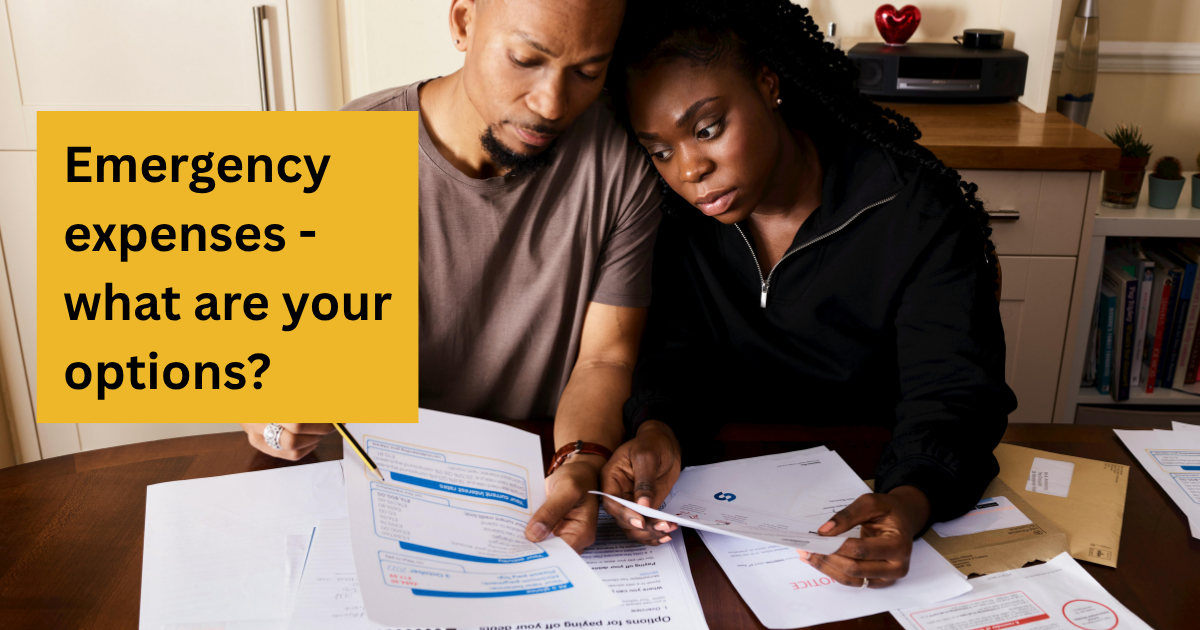
What do you do when an unexpected bill arrives?
Sometimes an unexpected expense couldn’t come at a worse time.
The car breaks down just before payday.
The boiler stops working.
Your child needs new school shoes.
Your washing machine gives up.
Or an important household bill is suddenly higher than expected.
When you don’t have enough money available, the pressure can be enormous.
So, what can you do?
First: don’t panic
When money is tight, it’s easy to make a quick decision simply because you need the problem solved.
But spending a few minutes looking at your options could save you money in the long run.
Start by asking:
How urgent is the expense?
If it can wait a week or two, you may have more options.
How much do I actually need?
Work out the exact amount rather than guessing.
Can I reduce the cost?
Get quotes, compare prices and ask whether there is a cheaper alternative.
Do I already have money available?
Check your savings before looking at borrowing.
Use savings if you can
This is exactly why having an emergency fund can be so useful.
Even a relatively small savings balance can help you deal with unexpected expenses without taking on new debt.
Whitehaven, Egremont & District Credit Union encourages members to build regular savings that can be used for things such as a rainy day, school uniforms, holidays or Christmas.
You don’t need thousands of pounds in savings for them to be useful.
A £100 emergency fund is better than no emergency fund.
Could you delay the expense?
Not everything needs to be paid immediately.
If your washing machine has broken, for example, could you manage temporarily without it?
If you need a new item, could you buy second-hand?
If a repair is needed, could you get several quotes?
Taking a little time can sometimes reduce the amount you need to find.
Be careful with quick loans
When you search online for emergency money, you will see plenty of adverts promising fast loans.
But “quick” doesn’t necessarily mean “cheap”.
Payday and short-term loans can be expensive, and MoneyHelper advises consumers to be aware of the cost of short-term borrowing.
Before accepting any loan, check:
- The interest rate
- The APR
- The total amount you’ll repay
- The repayment amount
- The repayment period
- Any fees or charges
- What happens if you miss a payment
Don’t only look at how quickly you can get the money.
Look at how much it will cost you to pay it back.
Could a credit union help?
A credit union is a good alternative to high-cost lenders.
Whitehaven, Egremont & District Credit Union provides affordable loans to eligible members across Cumbria, with applications considered based on individual circumstances and ability to repay.
We also offer emergency loans for eligible applicants who live or work within the common bond area. These are subject to eligibility, affordability and credit checks, and the current emergency loan maximum is £250 if you are unemployed, or £500 if you are employed.
It’s important to remember that an emergency loan is still a loan.
You will need to make repayments, so you should only borrow if those repayments are affordable. As part of our company policy, any loan repayment must also include an amount for your savings in the credit union. This is to provide you with a small foundation of savings – and to help promote financial resilience amongst our members.
What if you’re already struggling?
If your unexpected expense comes at a time when you’re already struggling with existing debts or bills, taking out more credit may not be the best solution.
Speak to a free debt advice organisation before borrowing more money.
You don’t have to wait until things become a crisis before asking for help.
Build an emergency fund for next time
Once you’ve dealt with the immediate problem, think about what you can do differently next time.
Could you start putting £2, £5 or £10 a week into savings?
It might take time, but gradually building an emergency fund means you may have money available when the next unexpected expense arrives.
For our members, regular saving can be done through methods such as standing order or payroll deduction – the automation makes the process easier.
The most important thing is to avoid making the problem bigger.
Unexpected expenses are part of life.
You can’t predict when the boiler will break or the car will need repairing.
But you can plan for them.
Build savings when you can, compare your borrowing options and never take out a loan without first checking that you can afford the repayments.
If you need affordable borrowing in Cumbria, we are here to help.